According to Cruise Law New, the Anthem of the Seas cut short a cruise earlier this week due to four passengers suffering from a medical emergency. Yet there is nothing in the media. Nothing on social media from Royal Caribbean or even passenger chat. We trust Cruise Law News and wish other outlets would follow up on these issues.
We understand that negative publicity impacts perceptions of cruises, but we really think the industry would benefit from better reporting. Take this case. If the details are true and there were four emergencies, why not get more information out there. It is a huge ship. Four people getting sick or injured could just be coincidence. But by not having more reporting, it seems like there is something wrong on board. It seems like there is something to hide.
Those people who don't like cruises or don't like cruising are not going to change their mind about one news report. But the lack of good reporting can hurt those who do want to sail on the Anthem.
Showing posts with label Cruise Law News. Show all posts
Showing posts with label Cruise Law News. Show all posts
Tuesday, November 24, 2015


Monday, November 9, 2015
Two sides disagree on overboard Royal Caribbean passenger
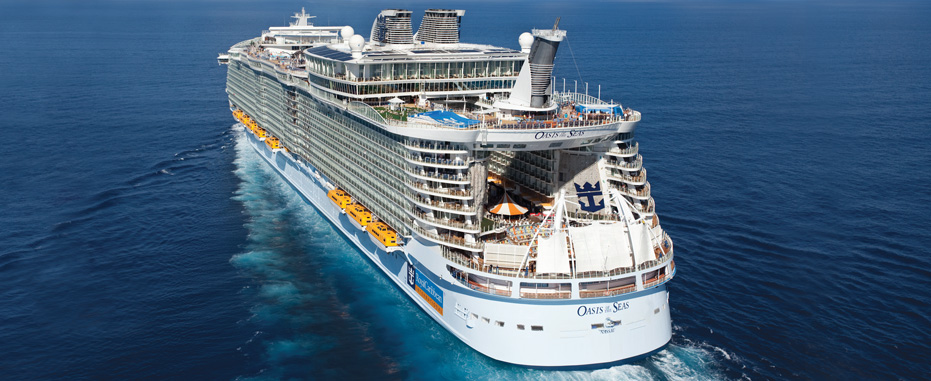
All interested parties agree that Oasis of the Seas passenger Bernardo Elbaz went overboard November 6. How and why is now the point of contention. Attorneys for the Elbaz family said the man was subject to anti-gay hostility from the crew and that an altercation in his cabin led to the fall. Royal Caribbean's statement was that a domestic dispute led to Elbaz jumping.
Complicating matters is the disturbing video of Elbaz clinging to a life boat after the initial fall from his balcony. In the video someone can be heard yelling: "You don’t touch me. Because of you this happened, because I stepped out the door. Let go of me."
If the reports are true that multiple crew members came to the cabin that night, it will be tough to dispute the true nature of the event. Either the crew members' stories will be consistent and point to Elbaz, or one of the crew members will come forward to identify any Royal Caribbean employees who might have physically forced Elbaz off the ship.
Our guess is that regardless of guilt, Royal Caribbean will look to settle. They don't want any negative attention especially as the industry approaches wave season.
Tuesday, September 29, 2015
Royal Caribbean leading way on sexual assault safety; is it enough?
Royal Caribbean earned the first-ever best practices certification from the Rape, Abuse, Incest National Network (RAINN). They are the only cruise line to go this far in ensuring safe and appropriate responses to sexual assaults at sea. The company deserves commendation for their progressive stance on the issue. However, is certification enough? Can Royal Caribbean and other cruise lines do more to prevent the crimes and keep their passengers safe?
According to Skift, the RAINN certification involves 11 key areas. Some focus on prevention and training, while others deal with post-assault victim support. Even prior to the certification, Royal Caribbean reported better sexual assault statistics than other cruise lines. But there are two areas where all cruise lines seem exposed. The first is alcohol consumption. Alcohol is a significant factor in many cruise-related injuries and crimes. Even with stricter policies and better awareness from servers and bartenders, there will be plenty of men and women impaired onboard. Some of these people will inevitably be involved in sexual assaults.
The other factor overlooked, but that has been a hot button on Cruise Law News, is screening and punishing crew. Many of the assaults are crew on passenger. Training is obviously important with this as is enhanced security and key access. But the background screening can be an issue. The criminal record systems in some of the countries from which the crews are hired are not always as thorough as in they are in the United States. Plenty of offenders have and will continue to slip through the cracks until better hiring practices are in place. If the cruise lines really want to address sexual assault, it will need to improve their hiring background checks.
According to Skift, the RAINN certification involves 11 key areas. Some focus on prevention and training, while others deal with post-assault victim support. Even prior to the certification, Royal Caribbean reported better sexual assault statistics than other cruise lines. But there are two areas where all cruise lines seem exposed. The first is alcohol consumption. Alcohol is a significant factor in many cruise-related injuries and crimes. Even with stricter policies and better awareness from servers and bartenders, there will be plenty of men and women impaired onboard. Some of these people will inevitably be involved in sexual assaults.
The other factor overlooked, but that has been a hot button on Cruise Law News, is screening and punishing crew. Many of the assaults are crew on passenger. Training is obviously important with this as is enhanced security and key access. But the background screening can be an issue. The criminal record systems in some of the countries from which the crews are hired are not always as thorough as in they are in the United States. Plenty of offenders have and will continue to slip through the cracks until better hiring practices are in place. If the cruise lines really want to address sexual assault, it will need to improve their hiring background checks.
Thursday, September 17, 2015
Report: fire on Carnival Pride
Cruise Law News is reporting that a fire took place Wednesday night on the Carnival Pride. According to their report, the fire was in the engine room and contained. The ship made its scheduled stop in Half Moon Cay Thursday, although it did arrive late. Surprisingly there is no mention of the fire from passengers on social media. Other recent ship fires provided lots of social media chatter and pictures from their respective passengers. There is also no official statement from Carnival. [UPDATE: Carnival is saying it was just smoke and not a fire.]
Unless pressed, Carnival should avoid any mention of the Carnival Pride fire. Coming on the heels of the Liberty's fire, this would amplify any worry from current and future customers. Carnival deserved commendation for handling the blaze, however, they need to discover why these fires keep breaking out.
Unless pressed, Carnival should avoid any mention of the Carnival Pride fire. Coming on the heels of the Liberty's fire, this would amplify any worry from current and future customers. Carnival deserved commendation for handling the blaze, however, they need to discover why these fires keep breaking out.
Monday, September 7, 2015
Carnival updates Carnival Liberty status after fire
Earlier Monday a fire broke out on the Carnival Liberty. The fire started in the engine room and was contained. The company reported no passenger injuries, though they did evacuate the ship on St. Thomas. According to Carnival the ship will sail again on Monday night. This was the second day of a cruise that left San Juan on Sunday.
It seems like there has been an increase of ship fires of late. Fortunately they've been handled well by the various crews. But this is another reminder to take all ship fire drills seriously.
It seems like there has been an increase of ship fires of late. Fortunately they've been handled well by the various crews. But this is another reminder to take all ship fire drills seriously.
Saturday, August 29, 2015
Bahamas warnings from Cruise Law News
Cruise Law News published another warning on traveler safety issues in the Bahamas. The post cites a series of statistics and warnings from the U.K. and Canadian governments on the dangers of the island nation. While the reports mentioned Grand Bahama and Freeport, for cruise goers, the main Bahamian destination remains Nassau.
Should you avoid the Bahamas on your next cruise? No. Any port in the Caribbean has a certain level of danger and risk. Do your research and take news reports and warnings seriously, but there is still plenty to see and do on the islands. While the ship's official excursions do not guarantee safety, they do provide an extra level of comfort and local knowledge. As with all tourism, use your best judgement, know where you are and always have a plan.
Should you avoid the Bahamas on your next cruise? No. Any port in the Caribbean has a certain level of danger and risk. Do your research and take news reports and warnings seriously, but there is still plenty to see and do on the islands. While the ship's official excursions do not guarantee safety, they do provide an extra level of comfort and local knowledge. As with all tourism, use your best judgement, know where you are and always have a plan.
Tuesday, August 11, 2015
Two different perspectives on Royal Caribbean's Boomerango

After not having water slides on their ships, Royal Caribbean has gone all in with a series of announcements about future slides on different ships. After drydock, The Liberty of the Seas will be the first at sea to have a "Boomerango" (above). This mutli-rider slide takes passengers up a steep vertical wall before they come back down again. It seems to be the latest and greatest in water slides. Yet for all the positive press Royal Caribbean gets, there are also some words of caution.
Most of the cruise media and review sites love the idea of the Boomerango. Cruise Law News has some other thoughts. They expect many injuries on the slide and also predict Royal Caribbean will not give passengers proper warning of the potential dangers. Cruise Law News uses the track record of the FlowRider and iFly as examples of how the company handles warnings and waivers.
Will there probably be injuries on the slide? Sure, but people get hurt on cruises in all sorts of different ways. The slides become an unmanageable risk or people are too scared to ride, Royal Caribbean will make an adjustment. All these attractions are about keeping people happy (and making money). Once the slide doesn't do that, it will come down.
Monday, June 29, 2015
Cruise Law News challenges Holland America
Last week's Alaskan plane crash that killed nine, including eight passengers from Holland America's Westerdam was a tragedy. Investigators are still trying to figure out what happened. During the initial hours after the crash, many in the industry felt that the accident could have happened to any cruise line. Cruise Law News' Jim Walker doesn't. He feels that some of Holland America's policies are reckless and putting lives at risk.
Flying in Alaska is tough under the best circumstances. There's fog. There's heavy winds. There a plenty of mountains and worst of all, the weather is ever-changing. Visual flying is the norm and it can lead to accidents. While cruise lines are not flying those planes, they are selecting the companies who work with their passengers. And the cruise companies also establish the policies on cancellation. It is Holland America's strict cancellation policy that has Walker concerned. He thinks that more customer-friendly policies, including letting people cancel much closer to the trip, would be better for everyone. The cruise lines though would probably fight the recommendation since the current policies keep the pilots happy and the revenues stable.
All bush pilots and planes in Alaska are under more scrutiny now. And that's a good thing. It should lead to better safety. But to make things that much better, we hope cruise lines think about Cruise Law News recommendations.
Tuesday, May 26, 2015
Recent drowning restarts cruise lifeguard debate
Last week a 10-year-old girl drowned on the Norwegian Gem. The tragedy restarted the debate on cruise lifeguards. As Cruise Law News noted, this is the seventh drowning-related incident on a cruise ship in the past two years. Because of the tragedy, cruise customers and concerned parents tend to react the same way: add lifeguards. However, lack of lifeguards are only part of the problem, and even with multiple steps to improve safety, no cruise ship will ever be 100% safe.
Lifeguards cannot prevent all drownings
Thousands of people will drown this year. They will drown in pools, lakes, the ocean, wherever there is water. Many will drown right in front of a lifeguard. Lifeguards are a preventative step, but no one can keep every swimmer safe. It only takes a minute for something to go wrong and depending on reaction time, a lifeguard can be too late. Would a lifeguard have made a difference on the Gem? Who knows. The pool was very crowded and relatively deep. All parents have to watch their children at any pool, but certainly one without a lifeguard.
Why don't cruise ships have lifeguards?
Even though they don't eliminate drownings, there is no reason all the major cruise lines shouldn't have lifeguards. Like many decisions, it is probably based on cost and perception. Lifeguards have limited utility on a ship where every worker tends to where multiple hats and can be used throughout the day. But also adding a lifeguard might make the parents become less engaged. They might think someone else is watching their child, so they don't have to pay as much attention. There is also the legal liability. When a cruise line adds a lifeguard it is somewhat implied that the guard is now responsible, instead of the passenger. Still, none of these costs or legal issues really justify not having lifeguards. As the lawsuits pile up from drownings, we predict that every big ship will soon have lifeguards. The insurance companies will insist.
What about passenger help
The most interesting aspect of the Cruise Law News report where some of the eyewitnesses explaining how passengers with medical training were not able to help. This is an even more complex legal issue. We are now in such a litigious time that cruise companies probably fear what any passenger might do to another in a time of crisis. A passenger who helps someone drowning or choking or having a heart attack, could be well intentioned, but the cruise staff is unable to check backgrounds or skills. Especially in the heat of the moment. It is a shame that good help might go to waste, but until the cruise companies can get some Good Samaritan clauses that hold up in court, it seems like it is best for everyone if the cruise employees handle emergencies.
Lifeguards cannot prevent all drownings
Thousands of people will drown this year. They will drown in pools, lakes, the ocean, wherever there is water. Many will drown right in front of a lifeguard. Lifeguards are a preventative step, but no one can keep every swimmer safe. It only takes a minute for something to go wrong and depending on reaction time, a lifeguard can be too late. Would a lifeguard have made a difference on the Gem? Who knows. The pool was very crowded and relatively deep. All parents have to watch their children at any pool, but certainly one without a lifeguard.
Why don't cruise ships have lifeguards?
Even though they don't eliminate drownings, there is no reason all the major cruise lines shouldn't have lifeguards. Like many decisions, it is probably based on cost and perception. Lifeguards have limited utility on a ship where every worker tends to where multiple hats and can be used throughout the day. But also adding a lifeguard might make the parents become less engaged. They might think someone else is watching their child, so they don't have to pay as much attention. There is also the legal liability. When a cruise line adds a lifeguard it is somewhat implied that the guard is now responsible, instead of the passenger. Still, none of these costs or legal issues really justify not having lifeguards. As the lawsuits pile up from drownings, we predict that every big ship will soon have lifeguards. The insurance companies will insist.
What about passenger help
The most interesting aspect of the Cruise Law News report where some of the eyewitnesses explaining how passengers with medical training were not able to help. This is an even more complex legal issue. We are now in such a litigious time that cruise companies probably fear what any passenger might do to another in a time of crisis. A passenger who helps someone drowning or choking or having a heart attack, could be well intentioned, but the cruise staff is unable to check backgrounds or skills. Especially in the heat of the moment. It is a shame that good help might go to waste, but until the cruise companies can get some Good Samaritan clauses that hold up in court, it seems like it is best for everyone if the cruise employees handle emergencies.
Subscribe to:
Posts (Atom)